

Umrah Guide
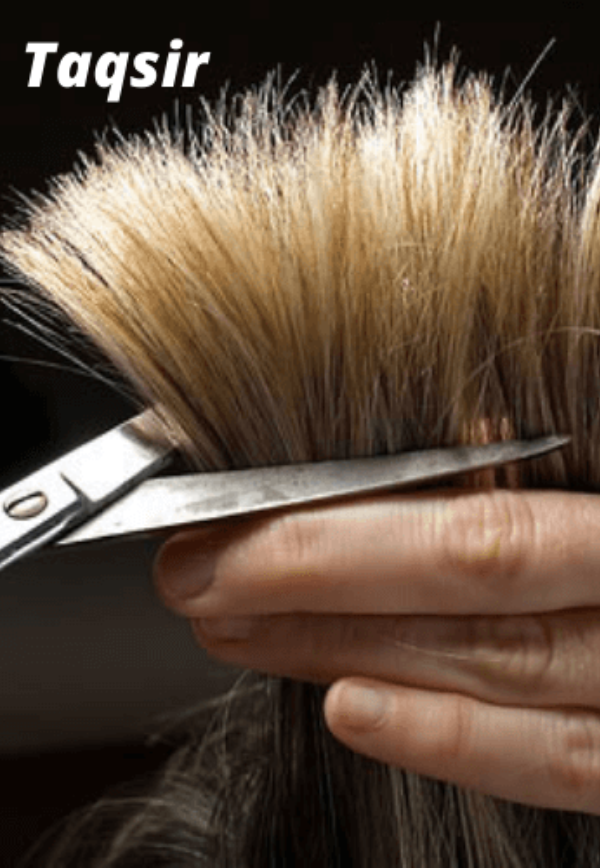
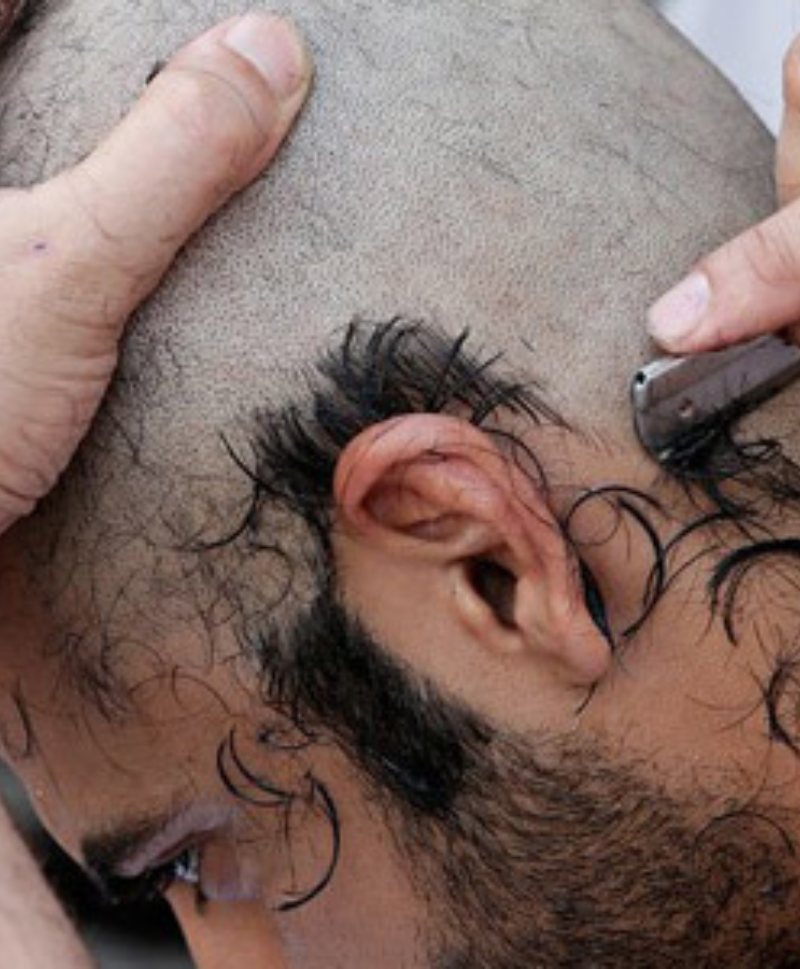
Umrah consists of four essential practices. Firstly, you get changed into the Ihram garments before the Miqat, perform two Rakahs of Salah and make your Niyyah as the Miqat approaches, thereafter reciting the Talbiyah frequently. Secondly, you perform Tawaf al-Umrah of the Kaaba followed by two Rakahs of Salah, preferably near Maqam Ibrahim. Thirdly, you do Sa’i of Safa and Marwah. Lastly, you shave (Halq) or shorten (Taqsir) your hair allowing you to leave the state of Ihram and complete your Umrah.
Ihram
Ihram (Arabic: إحرام) refers to the sacred state a pilgrim must enter before carrying out the rites of Hajj and Umrah. The pilgrim must enter into this state after cleansing the body, wearing the prescribed attire and making the intention, before crossing the designated Miqat.
Ihram For Men
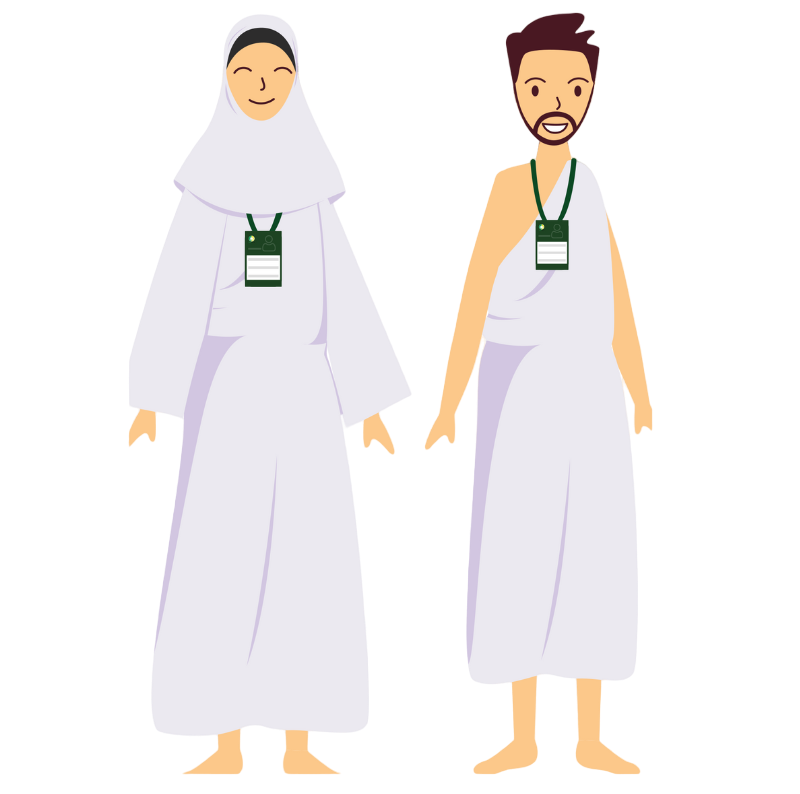
You will then get changed into your Ihram garments which for men consists of two, normally white, clean seamless pieces of cloth. The sheet which wraps around the waist covering the lower body is known as the Izar and the sheet that is draped over the upper body like a shawl is known as the Rida. Sandals shouldn’t cover the heel and ankle. The Hanafi school of thought also stipulates that the top part of the foot should also remain exposed.
Ihram For Women
Women aren’t required to conform to a specific dress code. Clothing should be normal modest Islamic dress with a head covering of any colour. Hands and faces must remain exposed although socks may be worn.
Important Things to know:
Niyyah
The Niyyah for Umrah should be made at the Miqat or close to it as you move in its direction. Ideally, you should delay making the intention until the last moment so you aren’t restricted by its prohibitions for longer than need be. It is recommended (Mustahab) that you make the intention verbally, as well as reiterating it internally.
Talbiyah
After making your Niyyah, you must recite the Talbiyah to validate your intention and enter into the state of Ihram. The utterance of the Talbiyah is Wajib according to the Hanafi and Maliki schools of thought. The Shafi’i and Hanbali schools consider it a Sunnah.
Haram Of Mecca
The Haram of Makkah is a sacred area that extends a number of miles around Masjid al-Haram in all directions. In this area….
Entering Mecca
After arriving at your accommodation in Makkah, you may want to freshen up or take a rest before making your way to Masjid al-Haram to perform Tawaf al-Umrah. If you decide to take a shower, ensure you don’t use any items that are prohibited in the state of Ihram e.g. scented soap or shampoo. It is recommended you present yourself at Masjid al-Haram as soon as possible.
Entering Masjid al- Haram
It is Sunnah to enter Masjid al-Haram via Bab al-Salam (the Gate of Peace). If you can’t do this, you may proceed through any other door. Step through with your right foot first and recite the supplication….
First Sight of the Kaaba
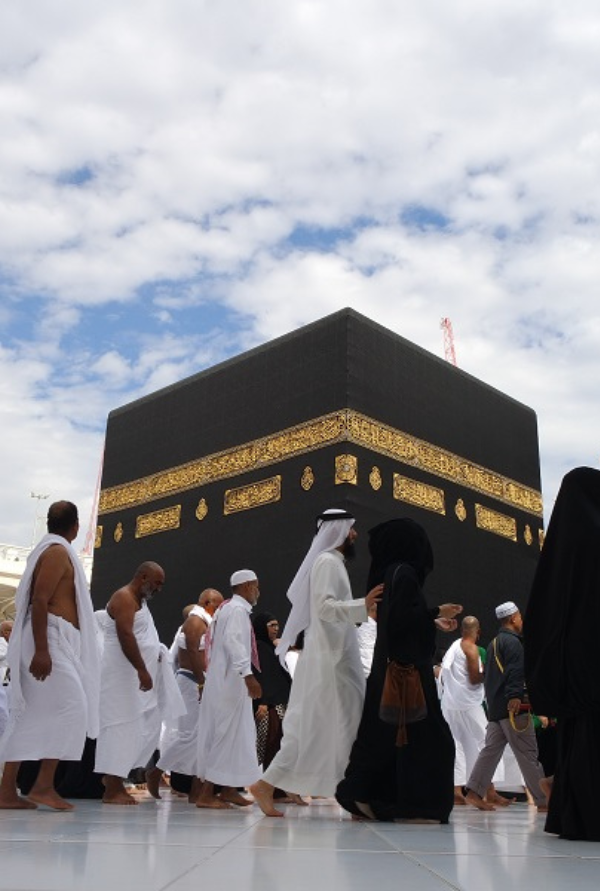
After entering the mosque, keep your gaze lowered until you reach the Mataf area, which is the open space where Tawaf takes place. When you’re ready, with humility, awe and reverence, lift your gaze to set sight on the beatific vision of the Holy Kaaba.

Tawaf al-Umrah
Tawaf (Arabic: طواف) is one of the principal rites of the pilgrimage and refers to circumambulating or walking in circles around the Kaaba in an anti-clockwise motion. Seven complete circuits, with each one starting and ending at the Hajar al-Aswad, constitute one Tawaf.
For the Tawaf to be considered valid, the following is necessary:
- Perform Tawaf yourself.
- Make an intention (verbally or not).
- Do Tawaf in Masjid al-Haram.
- Be in a state of Wudhu and free of anything that requires Ghusl e.g. menstruation.
- Conceal the Awrah.
- Start Tawaf from Hajar al-Aswad.
- Move in an anti-clockwise direction.
- Avoid the Hatim (the semi-circle area outside the Kaaba).
- Perform Tawaf by foot, for those who are able.
- Perform seven circuits.
- Perform two Rakahs of Salah after the Tawaf.
Sa’i
It is a Sunnah to perform Sa’i immediately after Tawaf, although you may take a break if you need to. If you feel tired after Tawaf or your feet are aching, you may take a rest in the pavilion until you feel you’re ready. Remember, you will be covering over three kilometers during Sa’i, so make sure you have sufficient energy to complete the rite before starting.
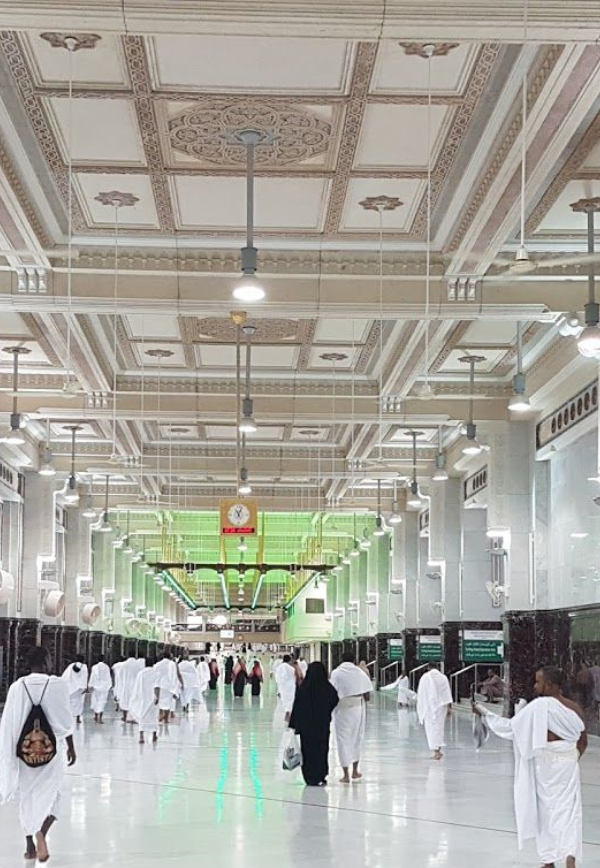
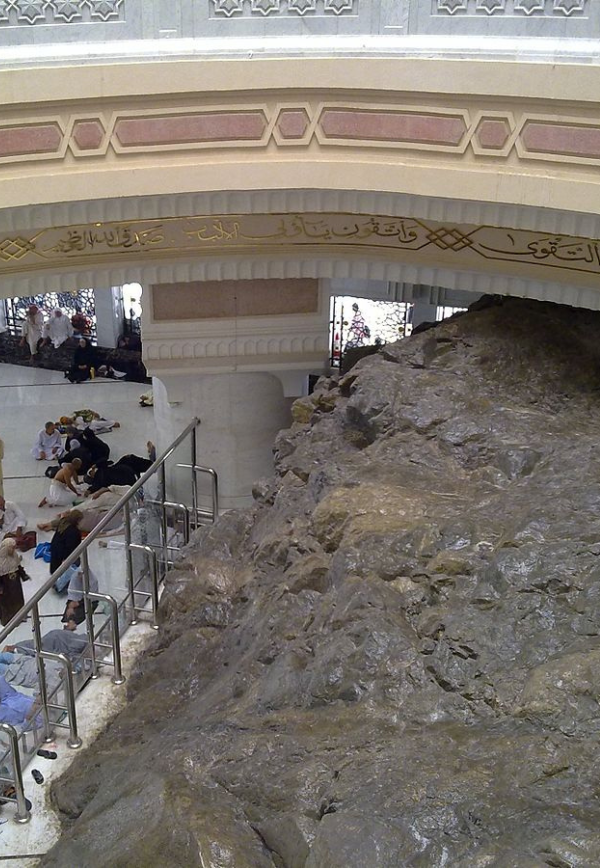

For the Sa’i to be considered valid, the following is necessary:
- Perform Sa’i yourself.
- Entered into Ihram before performing the Sa’i.
- Stay in Ihram until the Sa’i has been completed.
- Perform Sa’i at its correct time.
- Begin Sa’i at Safa and finish at Marwa.
- Perform Sa’i after having done Tawaf.
- Perform Sa’i on foot, unless you have a valid excuse.
- Perform seven laps.
- Cover the complete distance between Safa and Marwa.
Halq Or Taqsir
Congratulations On Your Umrah!
You are now free from the restrictions of Ihram and you may change into regular clothing. If you plan on performing another Umrah, you must travel to the boundary of the Haram in order to once again enter into Ihram. Most pilgrims choose to enter into Ihram at Masjid Aisha which is the nearest and most convenient location from Masjid al-Haram. Transportation to get there is available near the mosque.
Subscribe for Weekly Deals